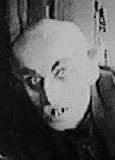
Please don't hurt me.
So, I was talking to a few of my friends the other day about the Lord of the Rings. I haven't finished the books, they were telling me that it was worth the time. Perhaps they are.
The biggest reason I don't really want to, though, is this:
I have no idea what's going on.
See, I definitely appreciate J.R.R. Tolkien's contributions to--nay, almost exclusive invention of--the modern Fantasy genre. Without Tolkien, we wouldn't have elves and halflings fighting alongside armies of people riding giant eagles against the orcish hordes, and so on and so on until one side or the other falls down dead. And I like that. A lot of people must like that, because the Tolkien Fantasy Genre has been the standard for fantasy for as long as I've been a nerd.
But I still have no idea what's going on.
It all started with Tom Bombadill. We've got the hobbits who head out of the shire--okay, yeah, I'm totally with you--after Bilbo's 111th birthday during which he used a magic ring to turn invisible--okay, sure--and then on the way to meet a wizard at a tavern, there's a guy who starts rhyming the trees into eating the hobbits. For no reason.
First of all, who the FUCK is this guy? Are we supposed to know who Tom Bombadill is? Is he important? All sources point to no, Tom. All sources point to NO.
So I stopped reading the Fellowship of the Ring, and started reading the Two Towers. I got a little way into it, and then Gandalf started talking about who his horse is. Apparently, Shadowfax is supposed to be some big fucking deal.
Dude. J.R.R.. IT IS A HORSE. IT IS NOT IMPORTANT TO THE PLOT.
I can appreciate the fact that he's trying to build a world here, and that the world is populated by a whole bunch of interesting and legendary creatures and things that we should care about. Like, I really do respect it.
But why tell us about Tom Bombadill when we don't know why the people from the South are supposed to be evil? Is it because they ride Oliphants? Sauron is against humans--or so I assume, from the line 'The age of man is ending'--so how do these people justify fighting for him?
How about the city out front of the Gondor capital? The one that has been an important battleground for whoever knows how long? Why are they fighting over it?
What is its strategic value? What is the fight about? Who lived there?
And really, why are the people fighting the Orcs in the first place? They obviously have language, and it's assumed that they have a culture of their own, so what happened to diplomacy? (Even if they're 'tortured elves.' Who tortured them? Why? Where did they get so god-damned many elves to torture? Seriously, there've gotta be a million of the fuckers just chillin' inside Mordor. Aren't Elves rare? Is this what MADE elves rare? Tell us!)
Instead of actually creating a history that involves more than the one battle between Sauron and the Last King of Gondor (or whatever), Tolkien pretty much focuses exclusively on how stoked he is about Elvish and the precise lineage of Gandalf's horse. So I guess my biggest complaint about the Lord of the Rings is the fact that I really couldn't care about the minutiae you seem to be obsessed with, J.R.R.. I just don't give a damn.
To redeem myself slightly, I effing loved The Hobbit. It is a better book than all three of (what I read of) the Lord of the Rings series combined. It has one of the best first lines of any book I've read: "In a hole in the ground lived a Hobbit."
It establishes the main character, who the main character is, what he does, and what is expected of the story (which is to say, he will leave his hole, both figuratively and literally, and go on an adventure.)
What is the story?
To go out and get gold.
Who is doing it?
A hobbit.
Who is the bad guy?
A dragon.
The story is strikingly simple, but Tolkien manages to fill it completely with an entire world; one so poignant that it inspired me to a life of nerd-dom. With a story as simple as the Hobbit, the world outside of the plot doesn't really need to be explained, just the parts that affect the movement. I really like The Hobbit. You should read The Hobbit. I think I might go read The Hobbit again.
Friday, July 16, 2010

Wednesday, June 23, 2010
Dime Store Packaging
There's something about dime store packaging that, to me, means the product inside is more real. Regardless of what it actually is, I think that the packaging makes the product sort of honest. It may just be me.
It might also be--again, for me--the fact that it seems like an artifact. In today's world, the only artifacts we've got are things from the fifties, it seems like. Marketing has been around so long that anything that looks like it was marketed to our grandparents has a way of seeming more mystical than it by-all-rights should.
For example, I got a 'voodoo witch-doctor doll' in the mail from my grandmother a while back; a cardboard cutout of a poorly drawn and highly stylized 'witch doctor' that came in a plastic bag with a set of pins and some paper. And damn if I didn't think, at first, that the thing couldn't do some sort of magic.
It was the way the thing looked, I think. It pulled off the creepy dime-store legitimacy perfectly. Bright primary colors, inkwashed into a rough caricature of a person wearing a "voodoo" costume. It was exactly the sort of thing that you find in a goosebumps chapter book. I grew up reading that crap; maybe that's why I think dime-store stuff is neat.
And it's not just my eerie voodoo doll sent to me by my grandmother as a birthday present. I work on and off in a costume shop, and the stuff they sell there is the same sort of thing. It seems like a good innocent laugh up on the floor, but down in the basement the stacks and stacks of fake teeth and magic tricks take on a sort of sinister personality. But I totally eat that shit up. It's awesome.
The art is amazing, too. It's perfected minimalism: it shows exactly what it wants to show you, without going anywhere over the limits it's set for itself. The images boil down to the most minute set of symbols the designer could manage: usually a smiling face, the product, and the product's name. If it were translated, it would be: "Our product! This is our product! It makes you happy!"
Say what you will about marketing, but there's something of a haiku in packaging like that.
Maybe that's part of the magic of it. I don't know. Something to think about, I guess.
It might also be--again, for me--the fact that it seems like an artifact. In today's world, the only artifacts we've got are things from the fifties, it seems like. Marketing has been around so long that anything that looks like it was marketed to our grandparents has a way of seeming more mystical than it by-all-rights should.
For example, I got a 'voodoo witch-doctor doll' in the mail from my grandmother a while back; a cardboard cutout of a poorly drawn and highly stylized 'witch doctor' that came in a plastic bag with a set of pins and some paper. And damn if I didn't think, at first, that the thing couldn't do some sort of magic.
It was the way the thing looked, I think. It pulled off the creepy dime-store legitimacy perfectly. Bright primary colors, inkwashed into a rough caricature of a person wearing a "voodoo" costume. It was exactly the sort of thing that you find in a goosebumps chapter book. I grew up reading that crap; maybe that's why I think dime-store stuff is neat.
And it's not just my eerie voodoo doll sent to me by my grandmother as a birthday present. I work on and off in a costume shop, and the stuff they sell there is the same sort of thing. It seems like a good innocent laugh up on the floor, but down in the basement the stacks and stacks of fake teeth and magic tricks take on a sort of sinister personality. But I totally eat that shit up. It's awesome.
The art is amazing, too. It's perfected minimalism: it shows exactly what it wants to show you, without going anywhere over the limits it's set for itself. The images boil down to the most minute set of symbols the designer could manage: usually a smiling face, the product, and the product's name. If it were translated, it would be: "Our product! This is our product! It makes you happy!"
Say what you will about marketing, but there's something of a haiku in packaging like that.
Maybe that's part of the magic of it. I don't know. Something to think about, I guess.
Thursday, June 10, 2010
Seriously, I actually really liked Paranormal Activity, but...
So, before I begin, let me just say:
Paranormal Activity is a good movie. It is scary. It is ACTUALLY scary. None of this bloody "Saw" bullshit, but actually scary. With the amount of money put into it, it shows that people who aren't James Cameron can also make movies, and make them good. I would take Paranormal Activity over Avatar any day of the week.
Anecdote time: I'm a horror movie snob, so all during the movie I was all like "ooh paranormal activity you ain't scary whut" but then, out back of my friend's house where I accidentally locked myself out and there were no lights and I couldn't figure out the latch on the backyard fence, I was almost shitting myself. I still get creep'd out by thinking about my closet light turning on by itself.
Paranormal Activity was a f***ing effective movie.
That being said--and this might just be a horror-snob-nitpick--I really wish they hadn't have told us that it was a demon.
First of all, Demons are not universal. They're pretty big, sure: if you've been brought up any kind of Christian, it's terrifying. But anybody else, from members of other religions or the just-plain-secular, just doesn't have the background it takes to really appreciate the subtext of Demons.
Also, Demons aren't really that scary anymore. Honestly, after seeing The Exorcist, I am no longer phased by demons unless they make you vomit split pea soup.
I actually just lied to you- Demons are still pretty scary, but you can't top The Exorcist if you're trying to make them the Big Bad of your movie (I mean, Captain Howdy?? WHAT THE F***. Terrifying.)
The whole 'Demon' plot also just felt a bit tacked-on to me. Like, "HOLY SHIT TERRIFYING THINGS ARE HAPPENING and there's a demon. DISEMBODIED FOOTSTEPS and there's a demon. LIGHTS ARE TURNING ON BY THEMSELVES and there's a demon." It was the least plausible part of the movie, really, that the husband could google-search possession victims. I honestly don't care that it's a demon. More on that in a second.
It also takes away from the anonymity of the movie. The most effective part of Paranormal Activity was the fact that it took place in a home that was basically yours. The exact same style as countless suburbs across America. Like, I have friends who lived in a house like that. We all do. Or we live in a house like that. The characters are standard people without much backstory--not much is needed in a movie like this--which allows the audience to project themselves into the scenario. It isn't even really important if the characters have names in this situation (maybe a drastic claim, but I stand by it.) The scariest part of the movie, then, is that this could be you.
But it isn't. The wife has been 'possessed' by the demon since she was a kid.
I wasn't.
Therefore, it couldn't happen to me. Right there, some of the fear is taken out. There is distance placed between the audience and the couple onscreen. To be fair, they try to save it by saying "Oh look at this other person who's been possessed! There seems to be no reasoning in how this demon chooses who to possess! It could possess anyone! Possess! Possess! Augh!" But personally, I don't buy it. I mean, the lady had been possessed since she was a little girl, so I'm assuming most of the audience watching the movie would have already known if this had happened to them or not.
By far my biggest problem, though, was in knowing the Big Bad was a demon, we know the Big Bad was a demon.
Let me explain: H.P. Lovecraft, in his essay "Supernatural Horror in Literature," opens with the phrase "The oldest and strongest emotion of mankind is fear, and the oldest and strongest kind of fear is the fear of the unknown" (Lovecraft, p.12 of my edition, if you're interested.)
So, by naming the Demon as a Demon, the movie immediately takes away that fear. Sure, it's still terrifying to know that there's a Demon in your house, but at least you know that it's a Demon. There are steps that can be taken. In horror, identification can be half the battle.
Just imagine the movie, though, if the couple has no idea what's going on. There are thumps and footsteps, faucets turning on and all that, and the couple says "woah, that's weird, let's film it." And then it gets worse. There's something in the house with them. And then they figure out that it's intelligent. Some intelligent, invisible, completely evil force that is slowly exerting more and more influence over their lives. They have absolutely no control.
Think of how terrifying it would make the picture the husband finds in the attic. Like, 'Holy shit, this thing hates you and has been f***ing with you since you were a child and you have no idea what it is or why it's doing it.'
And think of how terrifying it would make the buildup to the later parts of the movie!
(Side rant: the best part of the movie was her getting dragged out of bed. It took the threat from 'loud noises' to 'HOLY SHIT IT WANTS TO KILL YOU.' Holy CRAP that sequence was done so well!)
I mean, the progression from thumps to dragging her out of the bed to where she stands over her husband for hours would be so much better if the audience didn't know why it was happening! It drives home the whole 'random' thing SO much better than "ooh a demon can possess anybody ooh!"
Seriously though: it's still a really good movie. What it does well, it does REALLY well. I especially like the fact that, apparently, there were things in the movie that were only in some of the showings and not others. I just think that's cool.
(Speaking of which, I'm going off of the alternate ending here, not the cheesy J-horror ending where the guy gets thrown at the camera. Whole 'nother rant there.)
So yeah, that's what I'd do differently, but I still wholeheartedly recommend it. VERY good movie.
PS- the only thing I didn't really like action-wise was the ouiji board that lit on fire. That was pretty goofy.
Paranormal Activity is a good movie. It is scary. It is ACTUALLY scary. None of this bloody "Saw" bullshit, but actually scary. With the amount of money put into it, it shows that people who aren't James Cameron can also make movies, and make them good. I would take Paranormal Activity over Avatar any day of the week.
Anecdote time: I'm a horror movie snob, so all during the movie I was all like "ooh paranormal activity you ain't scary whut" but then, out back of my friend's house where I accidentally locked myself out and there were no lights and I couldn't figure out the latch on the backyard fence, I was almost shitting myself. I still get creep'd out by thinking about my closet light turning on by itself.
Paranormal Activity was a f***ing effective movie.
That being said--and this might just be a horror-snob-nitpick--I really wish they hadn't have told us that it was a demon.
First of all, Demons are not universal. They're pretty big, sure: if you've been brought up any kind of Christian, it's terrifying. But anybody else, from members of other religions or the just-plain-secular, just doesn't have the background it takes to really appreciate the subtext of Demons.
Also, Demons aren't really that scary anymore. Honestly, after seeing The Exorcist, I am no longer phased by demons unless they make you vomit split pea soup.
I actually just lied to you- Demons are still pretty scary, but you can't top The Exorcist if you're trying to make them the Big Bad of your movie (I mean, Captain Howdy?? WHAT THE F***. Terrifying.)
The whole 'Demon' plot also just felt a bit tacked-on to me. Like, "HOLY SHIT TERRIFYING THINGS ARE HAPPENING and there's a demon. DISEMBODIED FOOTSTEPS and there's a demon. LIGHTS ARE TURNING ON BY THEMSELVES and there's a demon." It was the least plausible part of the movie, really, that the husband could google-search possession victims. I honestly don't care that it's a demon. More on that in a second.
It also takes away from the anonymity of the movie. The most effective part of Paranormal Activity was the fact that it took place in a home that was basically yours. The exact same style as countless suburbs across America. Like, I have friends who lived in a house like that. We all do. Or we live in a house like that. The characters are standard people without much backstory--not much is needed in a movie like this--which allows the audience to project themselves into the scenario. It isn't even really important if the characters have names in this situation (maybe a drastic claim, but I stand by it.) The scariest part of the movie, then, is that this could be you.
But it isn't. The wife has been 'possessed' by the demon since she was a kid.
I wasn't.
Therefore, it couldn't happen to me. Right there, some of the fear is taken out. There is distance placed between the audience and the couple onscreen. To be fair, they try to save it by saying "Oh look at this other person who's been possessed! There seems to be no reasoning in how this demon chooses who to possess! It could possess anyone! Possess! Possess! Augh!" But personally, I don't buy it. I mean, the lady had been possessed since she was a little girl, so I'm assuming most of the audience watching the movie would have already known if this had happened to them or not.
By far my biggest problem, though, was in knowing the Big Bad was a demon, we know the Big Bad was a demon.
Let me explain: H.P. Lovecraft, in his essay "Supernatural Horror in Literature," opens with the phrase "The oldest and strongest emotion of mankind is fear, and the oldest and strongest kind of fear is the fear of the unknown" (Lovecraft, p.12 of my edition, if you're interested.)
So, by naming the Demon as a Demon, the movie immediately takes away that fear. Sure, it's still terrifying to know that there's a Demon in your house, but at least you know that it's a Demon. There are steps that can be taken. In horror, identification can be half the battle.
Just imagine the movie, though, if the couple has no idea what's going on. There are thumps and footsteps, faucets turning on and all that, and the couple says "woah, that's weird, let's film it." And then it gets worse. There's something in the house with them. And then they figure out that it's intelligent. Some intelligent, invisible, completely evil force that is slowly exerting more and more influence over their lives. They have absolutely no control.
Think of how terrifying it would make the picture the husband finds in the attic. Like, 'Holy shit, this thing hates you and has been f***ing with you since you were a child and you have no idea what it is or why it's doing it.'
And think of how terrifying it would make the buildup to the later parts of the movie!
(Side rant: the best part of the movie was her getting dragged out of bed. It took the threat from 'loud noises' to 'HOLY SHIT IT WANTS TO KILL YOU.' Holy CRAP that sequence was done so well!)
I mean, the progression from thumps to dragging her out of the bed to where she stands over her husband for hours would be so much better if the audience didn't know why it was happening! It drives home the whole 'random' thing SO much better than "ooh a demon can possess anybody ooh!"
Seriously though: it's still a really good movie. What it does well, it does REALLY well. I especially like the fact that, apparently, there were things in the movie that were only in some of the showings and not others. I just think that's cool.
(Speaking of which, I'm going off of the alternate ending here, not the cheesy J-horror ending where the guy gets thrown at the camera. Whole 'nother rant there.)
So yeah, that's what I'd do differently, but I still wholeheartedly recommend it. VERY good movie.
PS- the only thing I didn't really like action-wise was the ouiji board that lit on fire. That was pretty goofy.
Wednesday, June 2, 2010
The Problem of Rory (A.K.A Things I Don't Like #2 [contains spoilers in case anybody watches Dr. Who.])
This blog is turning into me bitching about English Major-y things that I think I could do better than the people who actually make their living doing them. Which is OK, because it turns out that I'm a little bit of a douchebag when it comes to matters of plot. Which in turn is OK because as of right now I think three people total have read my blog.
Turning to the matter at hand, I'm really pissed at Doctor Who right now. I wasn't at first, but the more I think about the issues I have with the show, the bigger they seem and the more roiled I get.
If you have any desire to watch Doctor Who's new season, and don't want anything spoiled, stop reading this.
Have you stopped reading this?
Yes?
Okay.
I am royally pissed at how Rory died.
More in general, I'm pissed that the two-part silurian story ended up as it did, for a few reasons (some nitpicky, some straight up essential.)I didn't like the way the story was laid out, and I didn't like the way the story ended up.
Let me say, though, that the concept was actually pretty cool and had a lot of potential. Secret underground prehistoric civilizations that actually have a right to live on Earth? Fantastic! Also, it totally skews the Doctor's whole 'HUMANS ARE AWESOME AND NOBODY ELSE IS' schtick. I really liked that the Silurians were supposed to be parallel to the humans, and mirror how difficult it must be to get along with us. I also love the idea that a race of lizard-humans would kick-start the ape-human space age.
But there are a few things wrong with the setup here:
1. Why were the human scientists digging in the middle of England near a church?
The show sort-of answers this by saying "Ooh there were minerals showing up that we haven't seen in a thousand years boodle-boodle-boo!" But what does that matter when it seems like your only goal is to dig twenty-one kilometers into the Earth?
Don't get me wrong: I can totally get behind the 'digging 21km into the earth FOR SCIENCE' thing, but in England? Why not in South America, like the Doctor and company were originally aiming for? Maybe even Chile? It would save a whole lot of hand-waving disparate plot points away, and even offer a cool reason for some Nazca lines or something. I just didn't understand what 'special minerals' had to do with anything (The Doctor says they're a warning. But that's never followed through with. And I think the glowing red dome that blots out the sun is warning enough.)
2. Why were the Silurians stealing bodies?
I mean, I can sort-of understand this: the Silurian doctor wanted the bodies to examine. But they negate the need for this when the Silurians begin to kidnap people. I mean, it was a cool idea and added a lot of 'WTF?' cred, but they never even mention it again after Rory is mistaken for a policeman.
3. Why was one of only two good Silurians responsible for dissecting living beings that are obviously sentient?
I mean, c'mon. They're speaking to you and wearing clothes. Sure, it was supposed to be a comment on the unfeeling science aspect of it all, and a parody of the Roswell dissection or something, and it played off of lizard-people-conspiracies (of which there are, apparently, several.) But then the scientist did a complete turnaround to the one lizard person with any emotion other than blind rage.
He even got an 'I love you' from the Doctor. No joke. With the human that he dissected standing right there next to them.
4. Why did Rory die like a bitch??
This is the one that pisses me off the most. The title of this post was supposed to be "Things I don't like #2: Stupid, pointless deaths" but I thought that might give the whole 'Rory dies' thing away.
So after the tunnels of the Silurian compound are flooded with toxic gas, the Evil Military Silurian aims a gun at the Doctor and Rory pushes him out of the way only to get shot himself because
Uh.
... Honestly, I don't know. It's already been proven that the Doctor can explode Silurian guns with his sonic screwdriver. It's not like it was running out of batteries, and the Evil Silurian wasn't exactly moving fast. The Doctor had plenty of time to disable the gun. I'm pretty sure he had the screwdriver out and was about to do so when Rory knocked him out of the way. Or, really, they could have all just stepped to the left about a foot and avoided the whole thing altogether.
And then, to top it off, Rory is erased from ever existing.
Seriously. There is some bullshit time-crack there and it eats him and he never existed. Even his time-traveling fiance doesn't remember him, even though it's been proven she can remember shit like that because she is a time traveler.
This pisses me off because A. Rory died like a bitch, and B. Rory didn't have a chance to ever do anything.
Here is where I begin a long, boring, theoretically-oriented rant on narrative:
Don't do that shit.
Always give your characters a good death. Or at least a death that means something. Or at least make it a point to say 'Oh no, what a meaningless death!'
So, because I'm a nerd, I play RPGs. In one particular RPG we were playing, a crazy guy captured a bunch of the players, and shot one dead for no particular reason. It was later agreed, that was a bullshit move.
I can respect the motivation for the GM: When a player dies, the others no longer feel like they're invincible. Put the fear of God into them, so to speak.
But that only works when they die as a consequence of their own stupidity.
If they get struck by lightning, then shit- what's the point of even playing?
The same holds true for stories. If a character gets hand-waved away, then the audience feels cheated. Especially when the character hasn't really contributed anything more than a minor speedbump in the plot.
Up until this point, Rory hadn't really done anything but nag Amy and be boring. The only impact he had on the plot was the fact that he was engaged to Amy, and that he died in a dream once. We don't even really know why Amy agreed to marry him in the first place. He mostly just sucks.
So when Rory got separated from the Doctor and Amy, I was thinking to myself "Shit yes! This is Rory's chance to kick some ass! Finally, we get to see his qualities on his own terms! He gets to redeem himself!"
But he doesn't. When he's mistaken for a policeman, he just kinda jumps in a grave and looks around then tells a little kid that the little kid is wrong. Then, when the Doctor and one of the scientists go down into the Silurian compound to rescue Amy, he's left in charge of safeguarding a hostage Silurian, and the prisoner dies because Rory wasn't watching her. Rory didn't even really try to resuscitate her after the prisoner was tazed to death. All Rory did was carry a dead lizardwoman down to the lizardpeople home and then he got shot.
And don't give me any of that "But he died sacrificing himself to save the Doctor!" because we all know that the doctor wasn't in any real danger.
Really, Rory was just removed from the plot. It was like the writers just got tired of him and decided he wasn't necessary anymore. Or they just really hated him, and decided to erase him from existence entirely.
This is some kind of lazy bullshit. They get rid of Rory without even expanding him as any sort of worthwhile character. They tip-toe around the fact that he died in a stupid way. They even avoid the emotional fallout of Amy having to live with the fact that the Doctor abandoned Rory to be eaten by the time-crack (which, as far as emotional tension goes, would have made the rest of the season EXCELLENT.)
Really, the whole two-parter seems put together for the entire purpose of killing Rory. And I feel like they expected the audience to get all choked up. But the truth of the matter is: we didn't. I don't think anybody ever really cared.
So the way I would have written the episode is this:
The Doctor and company land in the deserts of Chile with a witty quip about "Only a few hundred miles off this time! Personal record! blah blah we were going to Rio something something." or something like that.
Turns out, they've landed next to a mining team trying to break the record for the deepest tunnel, funded by some British company so the BBC doesn't have to hire actors from out of the country.
The goal is reached, and the Silurians respond because they've been threatened; after they send a scout up one of the humans is poisoned and the scout is subdued by Doctor and friends (an action-y sequence that takes up a good chunk of the episode.) The scout offers up very direct threats about an inter-species war, and then the Doctor and half of the party is swallowed up in an attack and the episode ends with Rory and the two others left wondering just what to do with the prisoner they've got.
Episode two begins with the captured Humans strapped to examination tables, coming around one by one to the Doctor Silurian taking notes on a dictaphone about how "the apes seem to have progressed remarkably from their humble beginnings." When Amy or someone wakes up, the doctor is shocked to find that the humans have developed language; he had assumed that the drill was a product of some otherworldly race that was planning to destroy the Silurians once and for all, and then someone tells him that it was just the humans trying to break a record (something which would have saved a shit-ton of trouble that NOBODY EVER SAID IN THE EPISODE.) He reveals that the compound is under martial law, with the military caste being the first to wake up. He must go and tell the Silurian President--or whatever--that they aren't actually under attack (something they assumed, since the scout never reported back.)
Meanwhile, up on the surface, Rory asserts that nobody should kill the Silurian, though the others want to kill or torture her (one because the others were taken and assumed dead, the other because he's been poisoned.) Rory takes control of the situation, and hesitatingly tries to figure out what is going on from the Silurian scout. They figure out that the chasm that grabbed the others was an emergency escape system for the Scout that misfired, taking the Doctor and his crew instead. Rory figures out, first, that the others might still be alive, and second, that they've unintentionally sparked an inter-species incident that might start a war. The scout says that the others are probably dead and dissected, and the two other Humans say they should kill the Silurian before she escapes and kills them. Rory says that they should use the scout as a bargaining chip for the return of the others, because he sees some humanity in the Silurian and thinks that the two species might not be so different (thus, the others might still be alive.) So the humans figure out that they can use the drill shaft to get to the Silurian complex that they've mistakenly burrowed into.
Down in the complex, the Doctor has arranged a meeting between the Humans and the Silurian Leader and the Silurian General. The humans reveal that it was their drill that punctured the Silurian complex and not some alien species. The leader and the general both take this somewhat warily; when the leader says that the Silurians, now awake, want to take the Earth back the Humans say that they can't (Rather dramatically, and somewhat uncharitably), and then the general points out that the scout hasn't returned, and the humans say that they don't know what happened to her. The leader is wary but okay with this, the general is not. They argue. The general pulls a gun on the leader, and declares a military coup, commanding that the humans and the leader be imprisoned to be executed, and that the invasion of the surface will commence. Then alarms start going off, saying something is coming down the drill shaft. The general assumes this is more troops from the surface, and tells troops to line up where the drill-hole is.
Cut to Rory and the two humans guarding the Silurian: they've descended on a maintenance lift that will open into the Silurian complex. Everyone is tense. The humans say they should have brought weapons. Rory isn't sure if they should have or not, but he says they're sticking to the plan.
The doors to the lift open up, and the Silurian General tells her troops to open fire on what she thinks is an invasion force. Rory, seeing that the Silurian scout is about to be shot, shoves her out of the way and gets shot himself. The Doctor screams to the Silurians to cease fire and they listen because he's the Doctor (and you're allowed one minor plot fudge.) The Doctor and company run up to the other humans and the Silurian and dying Rory and the Doctor says something about how Rory is the best humanity has to offer (which is a theme in the real episode) before Rory dies in Amy's arms. The Humans and Silurians look on and decide to talk it out instead of shoot it out. They all ascend on the lift to tell governments and stuff that there's another species on the Earth.
When they get to the top, there's a time-crack waiting for them, eating up the laboratory. Some of the humans and Rory's body fall in; the Doctor reaches in to grab Rory and pulls out the chunk of the Tardis that he finds at the end of the real episode. The building is about to collapse, so the Doctor has to convince Amy to leave Rory behind and go to the Tardis. Rory lives on in The Doctor's and Amy's minds, but nobody else's. Amy decides she wants to go home (because the death of her fiance should have SOME GODDAMN IMPACT) and the Doctor agrees, but then they end up in Holland with Vincent Van Gogh, because it seems like another theme of the season that the Tardis isn't cooperating.
And that's how I would do it.
No stupid little kid, no stupid "The silurians will be back in one thousand years! Shape up, humanity!" And most of all no stupid death for Rory, damnit.
Turning to the matter at hand, I'm really pissed at Doctor Who right now. I wasn't at first, but the more I think about the issues I have with the show, the bigger they seem and the more roiled I get.
If you have any desire to watch Doctor Who's new season, and don't want anything spoiled, stop reading this.
Have you stopped reading this?
Yes?
Okay.
I am royally pissed at how Rory died.
More in general, I'm pissed that the two-part silurian story ended up as it did, for a few reasons (some nitpicky, some straight up essential.)I didn't like the way the story was laid out, and I didn't like the way the story ended up.
Let me say, though, that the concept was actually pretty cool and had a lot of potential. Secret underground prehistoric civilizations that actually have a right to live on Earth? Fantastic! Also, it totally skews the Doctor's whole 'HUMANS ARE AWESOME AND NOBODY ELSE IS' schtick. I really liked that the Silurians were supposed to be parallel to the humans, and mirror how difficult it must be to get along with us. I also love the idea that a race of lizard-humans would kick-start the ape-human space age.
But there are a few things wrong with the setup here:
1. Why were the human scientists digging in the middle of England near a church?
The show sort-of answers this by saying "Ooh there were minerals showing up that we haven't seen in a thousand years boodle-boodle-boo!" But what does that matter when it seems like your only goal is to dig twenty-one kilometers into the Earth?
Don't get me wrong: I can totally get behind the 'digging 21km into the earth FOR SCIENCE' thing, but in England? Why not in South America, like the Doctor and company were originally aiming for? Maybe even Chile? It would save a whole lot of hand-waving disparate plot points away, and even offer a cool reason for some Nazca lines or something. I just didn't understand what 'special minerals' had to do with anything (The Doctor says they're a warning. But that's never followed through with. And I think the glowing red dome that blots out the sun is warning enough.)
2. Why were the Silurians stealing bodies?
I mean, I can sort-of understand this: the Silurian doctor wanted the bodies to examine. But they negate the need for this when the Silurians begin to kidnap people. I mean, it was a cool idea and added a lot of 'WTF?' cred, but they never even mention it again after Rory is mistaken for a policeman.
3. Why was one of only two good Silurians responsible for dissecting living beings that are obviously sentient?
I mean, c'mon. They're speaking to you and wearing clothes. Sure, it was supposed to be a comment on the unfeeling science aspect of it all, and a parody of the Roswell dissection or something, and it played off of lizard-people-conspiracies (of which there are, apparently, several.) But then the scientist did a complete turnaround to the one lizard person with any emotion other than blind rage.
He even got an 'I love you' from the Doctor. No joke. With the human that he dissected standing right there next to them.
4. Why did Rory die like a bitch??
This is the one that pisses me off the most. The title of this post was supposed to be "Things I don't like #2: Stupid, pointless deaths" but I thought that might give the whole 'Rory dies' thing away.
So after the tunnels of the Silurian compound are flooded with toxic gas, the Evil Military Silurian aims a gun at the Doctor and Rory pushes him out of the way only to get shot himself because
Uh.
... Honestly, I don't know. It's already been proven that the Doctor can explode Silurian guns with his sonic screwdriver. It's not like it was running out of batteries, and the Evil Silurian wasn't exactly moving fast. The Doctor had plenty of time to disable the gun. I'm pretty sure he had the screwdriver out and was about to do so when Rory knocked him out of the way. Or, really, they could have all just stepped to the left about a foot and avoided the whole thing altogether.
And then, to top it off, Rory is erased from ever existing.
Seriously. There is some bullshit time-crack there and it eats him and he never existed. Even his time-traveling fiance doesn't remember him, even though it's been proven she can remember shit like that because she is a time traveler.
This pisses me off because A. Rory died like a bitch, and B. Rory didn't have a chance to ever do anything.
Here is where I begin a long, boring, theoretically-oriented rant on narrative:
Don't do that shit.
Always give your characters a good death. Or at least a death that means something. Or at least make it a point to say 'Oh no, what a meaningless death!'
So, because I'm a nerd, I play RPGs. In one particular RPG we were playing, a crazy guy captured a bunch of the players, and shot one dead for no particular reason. It was later agreed, that was a bullshit move.
I can respect the motivation for the GM: When a player dies, the others no longer feel like they're invincible. Put the fear of God into them, so to speak.
But that only works when they die as a consequence of their own stupidity.
If they get struck by lightning, then shit- what's the point of even playing?
The same holds true for stories. If a character gets hand-waved away, then the audience feels cheated. Especially when the character hasn't really contributed anything more than a minor speedbump in the plot.
Up until this point, Rory hadn't really done anything but nag Amy and be boring. The only impact he had on the plot was the fact that he was engaged to Amy, and that he died in a dream once. We don't even really know why Amy agreed to marry him in the first place. He mostly just sucks.
So when Rory got separated from the Doctor and Amy, I was thinking to myself "Shit yes! This is Rory's chance to kick some ass! Finally, we get to see his qualities on his own terms! He gets to redeem himself!"
But he doesn't. When he's mistaken for a policeman, he just kinda jumps in a grave and looks around then tells a little kid that the little kid is wrong. Then, when the Doctor and one of the scientists go down into the Silurian compound to rescue Amy, he's left in charge of safeguarding a hostage Silurian, and the prisoner dies because Rory wasn't watching her. Rory didn't even really try to resuscitate her after the prisoner was tazed to death. All Rory did was carry a dead lizardwoman down to the lizardpeople home and then he got shot.
And don't give me any of that "But he died sacrificing himself to save the Doctor!" because we all know that the doctor wasn't in any real danger.
Really, Rory was just removed from the plot. It was like the writers just got tired of him and decided he wasn't necessary anymore. Or they just really hated him, and decided to erase him from existence entirely.
This is some kind of lazy bullshit. They get rid of Rory without even expanding him as any sort of worthwhile character. They tip-toe around the fact that he died in a stupid way. They even avoid the emotional fallout of Amy having to live with the fact that the Doctor abandoned Rory to be eaten by the time-crack (which, as far as emotional tension goes, would have made the rest of the season EXCELLENT.)
Really, the whole two-parter seems put together for the entire purpose of killing Rory. And I feel like they expected the audience to get all choked up. But the truth of the matter is: we didn't. I don't think anybody ever really cared.
So the way I would have written the episode is this:
The Doctor and company land in the deserts of Chile with a witty quip about "Only a few hundred miles off this time! Personal record! blah blah we were going to Rio something something." or something like that.
Turns out, they've landed next to a mining team trying to break the record for the deepest tunnel, funded by some British company so the BBC doesn't have to hire actors from out of the country.
The goal is reached, and the Silurians respond because they've been threatened; after they send a scout up one of the humans is poisoned and the scout is subdued by Doctor and friends (an action-y sequence that takes up a good chunk of the episode.) The scout offers up very direct threats about an inter-species war, and then the Doctor and half of the party is swallowed up in an attack and the episode ends with Rory and the two others left wondering just what to do with the prisoner they've got.
Episode two begins with the captured Humans strapped to examination tables, coming around one by one to the Doctor Silurian taking notes on a dictaphone about how "the apes seem to have progressed remarkably from their humble beginnings." When Amy or someone wakes up, the doctor is shocked to find that the humans have developed language; he had assumed that the drill was a product of some otherworldly race that was planning to destroy the Silurians once and for all, and then someone tells him that it was just the humans trying to break a record (something which would have saved a shit-ton of trouble that NOBODY EVER SAID IN THE EPISODE.) He reveals that the compound is under martial law, with the military caste being the first to wake up. He must go and tell the Silurian President--or whatever--that they aren't actually under attack (something they assumed, since the scout never reported back.)
Meanwhile, up on the surface, Rory asserts that nobody should kill the Silurian, though the others want to kill or torture her (one because the others were taken and assumed dead, the other because he's been poisoned.) Rory takes control of the situation, and hesitatingly tries to figure out what is going on from the Silurian scout. They figure out that the chasm that grabbed the others was an emergency escape system for the Scout that misfired, taking the Doctor and his crew instead. Rory figures out, first, that the others might still be alive, and second, that they've unintentionally sparked an inter-species incident that might start a war. The scout says that the others are probably dead and dissected, and the two other Humans say they should kill the Silurian before she escapes and kills them. Rory says that they should use the scout as a bargaining chip for the return of the others, because he sees some humanity in the Silurian and thinks that the two species might not be so different (thus, the others might still be alive.) So the humans figure out that they can use the drill shaft to get to the Silurian complex that they've mistakenly burrowed into.
Down in the complex, the Doctor has arranged a meeting between the Humans and the Silurian Leader and the Silurian General. The humans reveal that it was their drill that punctured the Silurian complex and not some alien species. The leader and the general both take this somewhat warily; when the leader says that the Silurians, now awake, want to take the Earth back the Humans say that they can't (Rather dramatically, and somewhat uncharitably), and then the general points out that the scout hasn't returned, and the humans say that they don't know what happened to her. The leader is wary but okay with this, the general is not. They argue. The general pulls a gun on the leader, and declares a military coup, commanding that the humans and the leader be imprisoned to be executed, and that the invasion of the surface will commence. Then alarms start going off, saying something is coming down the drill shaft. The general assumes this is more troops from the surface, and tells troops to line up where the drill-hole is.
Cut to Rory and the two humans guarding the Silurian: they've descended on a maintenance lift that will open into the Silurian complex. Everyone is tense. The humans say they should have brought weapons. Rory isn't sure if they should have or not, but he says they're sticking to the plan.
The doors to the lift open up, and the Silurian General tells her troops to open fire on what she thinks is an invasion force. Rory, seeing that the Silurian scout is about to be shot, shoves her out of the way and gets shot himself. The Doctor screams to the Silurians to cease fire and they listen because he's the Doctor (and you're allowed one minor plot fudge.) The Doctor and company run up to the other humans and the Silurian and dying Rory and the Doctor says something about how Rory is the best humanity has to offer (which is a theme in the real episode) before Rory dies in Amy's arms. The Humans and Silurians look on and decide to talk it out instead of shoot it out. They all ascend on the lift to tell governments and stuff that there's another species on the Earth.
When they get to the top, there's a time-crack waiting for them, eating up the laboratory. Some of the humans and Rory's body fall in; the Doctor reaches in to grab Rory and pulls out the chunk of the Tardis that he finds at the end of the real episode. The building is about to collapse, so the Doctor has to convince Amy to leave Rory behind and go to the Tardis. Rory lives on in The Doctor's and Amy's minds, but nobody else's. Amy decides she wants to go home (because the death of her fiance should have SOME GODDAMN IMPACT) and the Doctor agrees, but then they end up in Holland with Vincent Van Gogh, because it seems like another theme of the season that the Tardis isn't cooperating.
And that's how I would do it.
No stupid little kid, no stupid "The silurians will be back in one thousand years! Shape up, humanity!" And most of all no stupid death for Rory, damnit.
Tuesday, May 18, 2010
WHY I DON'T LIKE BOONDOCK SAINTS
I don't like Boondock Saints.
There.
I said it.
I know people out there who would knife me for saying this. People who I know, and people who I feel comfortable around, otherwise. But something about this movie drives people nuts. Fanatically nuts.
I don't know what it is.
I mean, sure, there are a few things: it's an 'empowering' movie where two really attractive Irish guys shoot a bunch of people and then there's an eccentric detective, but other than those shiny surface features, there's not much to this movie.
Not only that, but there are things about this movie that straight up suck (Or, at least, straight up suck in MY opinion. But we all know I'm a prick.) In the interest of 'I-need-to-vent-this,' here is an enumerated list:
1. CHARACTERIZATION
What do we know about the Irish brothers?
A list:
a. They are Irish.
b. They are Brothers.
c. They have skills that Rambo would envy, leading me to believe they were really unactivated sleeper-agents placed by the Soviet Union. But this is just a conjecture.
So who are they?
I have no clue. They are fun-loving Irish people that live in Boston. They like to drink. They are Catholic.
These are character traits that define maybe a good eight tenths of Boston's population. In other words, there is nothing special or unique, or even personable about the characters. There is nothing here that an audience can relate to.
Why does this matter?
Because when an audience can't relate to a character, the audience doesn't care. It's the difference between someone on the evening news that was arrested for shooting people, and your friend telling you about that one time he got arrested for peeing on a cop car. One story may be infinitely more exciting, but for some reason we're much more interested in our friend's urinary habits.
In short, I just didn't care about the Irish brothers. I can't even remember their names. To me, they seemed completely interchangeable.
And the father? Who the fuck was he? I mean, seriously, what the fuck was the point of the father in this movie? He had nothing to do with the plot! He was working for the mafia, and then he heard his kids saying a prayer, and I guess he changed his mind about working for the mafia because then he started shooting the shit out of them. Really, his only purpose was to help the Irish Brothers at the end so they didn't die. Otherwise, he was without a name, a personality, or any defining characteristics besides four guns and a rad pair of shades.
The one character that I cared about in the movie was the detective. He was interesting! He wasn't particularly well thought-out, and I wasn't sure why he did some of the things he did--specifically, when he shouts "THERE WAS A FIRE! FIIIIGHT!" and things like that--but at least he was a person that wasn't like all the other people in Boston. My biggest problem with the detective was the fact that the movie wasn't about him. The movie basically ignored everything about him that had been established.
Which leads into:
2. PLOT/CONFLICT
I know, I know- "Two Irish guys decide to stick it to the Mafia because a mafia underling tells them that they can totally do it, and God tells them to, also. Then there is an eccentric detective that tries to track them down and ends up helping them. Also their father is hired by the mafia to kill them, but ends up joining them."
Sure, there's a through-line here. Irish guys kill Italian guys. I can get behind that. The real question for me is, where is the conflict?
And don't tell me that it's Irish Brothers that Shoot People. Guns aren't conflict. Guns are tools that are sometimes used as a result of conflict. The Irish Brothers are about as far away from conflict as you can possibly get.
Before I go any further, I feel like I should explain what I mean when I say 'conflict.'
When I say 'conflict,' I'm talking ideals.
Wars aren't fought because people shoot at each other- wars are fought because one side has a different idea of what's "Right" than the other does. The shooting comes after.
On an individual level, this manifests itself through a character who has two irreconcilable ideas and has to decide which to favor. In the case of multiple characters, this manifests itself through one set facing off against the other set because the two have irreconcilable ideals. The common thread here is 'irreconcilable ideals' leading to 'conflict.'
This is why I say the Irish Brothers are without conflict: they are completely resolute in their cause, and their cause is shooting bad-guys. There is no conflict there; no chance for dialogue between opposing forces, no change, and ultimately no humanity. Not even complexity. Not even a plot, really.
Here, of course, there is the argument that the detective represents the conflict of the movie. And I would totally agree with that. And then I would point out the fact that he doesn't really matter, in the end.
His entire investigation culminates in a conflict: does he pursue the Brothers? Or does he let them go, and betray his entire identity as a representative of the law?
This is an excellent conflict. It calls into question the Detective's sense of purpose, his identity, and his ultimate goal. He tears himself up inside after finding out who the killers are, because--despite himself--he actually agrees with what they're doing.
And then he decides to let them go, and we don't really hear from him ever again. It was as if an entire half of the movie just didn't matter. His whole investigation just stopped in its tracks and didn't have any bearing on the actual plot of the movie.
The detective spent the first four fifths of the movie playing catch-up, and then stopped because it turns out that--despite all evidence to the contrary--he didn't disagree with the Brothers at all. His cop-side gave up without a fight. The Brothers really couldn't care less, in the end. Though he did cross-dress in one scene, which was funny because men don't dress like that.
My big problem with the detective was that the only interesting conflict in the movie was completely and wholeheartedly aborted. The detective didn't once look back to remember that, yes, actually, he was a detective and the Irish Brothers were breaking the law in a serious way.
Which leads me to my third point:
3. ANYBODY WHO DISAGREES WITH THIS MOVIE IS A PUSSY.
The biggest thing that pisses me off about this movie is the end credits where they show everybody's varying opinions on whether or not the Irish Brothers are doing the right thing.
It pisses me off because the entire movie just showed that the Irish Brothers are doing the right thing, and the audience should agree because we're supposed to sympathize with the Irish Brothers. After all, even the detective sympathized with them, regardless of what he actually would have or should have done.
So when we see someone say "Well dur-HUK I don't think the Boondock Saints should go around shooting people dur-HUK" the audience IMMEDIATELY says "Well of course they should! What the fuck movie were YOU watching, dumbass?!"
What's wrong with this picture?
I'll tell you what's wrong with this picture.
The fact that the movie has made an opinion for you. It precludes any notion that the Irish Brothers were wrong, and makes up your mind long before the possibility of doubt is expressed. There is no freedom of choice in Boondock Saints; instead, the audience is blatantly told that our legal system is ineffective and the only way justice should be served is through the barrel of a gun.
That's called Fascism.
There's a reason it seems like an 'empowering' movie: it shows an effective method of enforcing an ideal, and anybody with a gun can do it. The issue comes when the people with the gun don't have the same ideals as you. For instance, what happens if a judge says that they're screwing over due process? Are they going to kill him, too?
The end of the movie says that doesn't matter, because the Irish Brothers are right and they took matters into their own hands against a clearly evil mafia. Anybody who says otherwise is wrong. After all, even the detective--a representative of the law--says the Irish Brothers are right.
There.
I said it.
I know people out there who would knife me for saying this. People who I know, and people who I feel comfortable around, otherwise. But something about this movie drives people nuts. Fanatically nuts.
I don't know what it is.
I mean, sure, there are a few things: it's an 'empowering' movie where two really attractive Irish guys shoot a bunch of people and then there's an eccentric detective, but other than those shiny surface features, there's not much to this movie.
Not only that, but there are things about this movie that straight up suck (Or, at least, straight up suck in MY opinion. But we all know I'm a prick.) In the interest of 'I-need-to-vent-this,' here is an enumerated list:
1. CHARACTERIZATION
What do we know about the Irish brothers?
A list:
a. They are Irish.
b. They are Brothers.
c. They have skills that Rambo would envy, leading me to believe they were really unactivated sleeper-agents placed by the Soviet Union. But this is just a conjecture.
So who are they?
I have no clue. They are fun-loving Irish people that live in Boston. They like to drink. They are Catholic.
These are character traits that define maybe a good eight tenths of Boston's population. In other words, there is nothing special or unique, or even personable about the characters. There is nothing here that an audience can relate to.
Why does this matter?
Because when an audience can't relate to a character, the audience doesn't care. It's the difference between someone on the evening news that was arrested for shooting people, and your friend telling you about that one time he got arrested for peeing on a cop car. One story may be infinitely more exciting, but for some reason we're much more interested in our friend's urinary habits.
In short, I just didn't care about the Irish brothers. I can't even remember their names. To me, they seemed completely interchangeable.
And the father? Who the fuck was he? I mean, seriously, what the fuck was the point of the father in this movie? He had nothing to do with the plot! He was working for the mafia, and then he heard his kids saying a prayer, and I guess he changed his mind about working for the mafia because then he started shooting the shit out of them. Really, his only purpose was to help the Irish Brothers at the end so they didn't die. Otherwise, he was without a name, a personality, or any defining characteristics besides four guns and a rad pair of shades.
The one character that I cared about in the movie was the detective. He was interesting! He wasn't particularly well thought-out, and I wasn't sure why he did some of the things he did--specifically, when he shouts "THERE WAS A FIRE! FIIIIGHT!" and things like that--but at least he was a person that wasn't like all the other people in Boston. My biggest problem with the detective was the fact that the movie wasn't about him. The movie basically ignored everything about him that had been established.
Which leads into:
2. PLOT/CONFLICT
I know, I know- "Two Irish guys decide to stick it to the Mafia because a mafia underling tells them that they can totally do it, and God tells them to, also. Then there is an eccentric detective that tries to track them down and ends up helping them. Also their father is hired by the mafia to kill them, but ends up joining them."
Sure, there's a through-line here. Irish guys kill Italian guys. I can get behind that. The real question for me is, where is the conflict?
And don't tell me that it's Irish Brothers that Shoot People. Guns aren't conflict. Guns are tools that are sometimes used as a result of conflict. The Irish Brothers are about as far away from conflict as you can possibly get.
Before I go any further, I feel like I should explain what I mean when I say 'conflict.'
When I say 'conflict,' I'm talking ideals.
Wars aren't fought because people shoot at each other- wars are fought because one side has a different idea of what's "Right" than the other does. The shooting comes after.
On an individual level, this manifests itself through a character who has two irreconcilable ideas and has to decide which to favor. In the case of multiple characters, this manifests itself through one set facing off against the other set because the two have irreconcilable ideals. The common thread here is 'irreconcilable ideals' leading to 'conflict.'
This is why I say the Irish Brothers are without conflict: they are completely resolute in their cause, and their cause is shooting bad-guys. There is no conflict there; no chance for dialogue between opposing forces, no change, and ultimately no humanity. Not even complexity. Not even a plot, really.
Here, of course, there is the argument that the detective represents the conflict of the movie. And I would totally agree with that. And then I would point out the fact that he doesn't really matter, in the end.
His entire investigation culminates in a conflict: does he pursue the Brothers? Or does he let them go, and betray his entire identity as a representative of the law?
This is an excellent conflict. It calls into question the Detective's sense of purpose, his identity, and his ultimate goal. He tears himself up inside after finding out who the killers are, because--despite himself--he actually agrees with what they're doing.
And then he decides to let them go, and we don't really hear from him ever again. It was as if an entire half of the movie just didn't matter. His whole investigation just stopped in its tracks and didn't have any bearing on the actual plot of the movie.
The detective spent the first four fifths of the movie playing catch-up, and then stopped because it turns out that--despite all evidence to the contrary--he didn't disagree with the Brothers at all. His cop-side gave up without a fight. The Brothers really couldn't care less, in the end. Though he did cross-dress in one scene, which was funny because men don't dress like that.
My big problem with the detective was that the only interesting conflict in the movie was completely and wholeheartedly aborted. The detective didn't once look back to remember that, yes, actually, he was a detective and the Irish Brothers were breaking the law in a serious way.
Which leads me to my third point:
3. ANYBODY WHO DISAGREES WITH THIS MOVIE IS A PUSSY.
The biggest thing that pisses me off about this movie is the end credits where they show everybody's varying opinions on whether or not the Irish Brothers are doing the right thing.
It pisses me off because the entire movie just showed that the Irish Brothers are doing the right thing, and the audience should agree because we're supposed to sympathize with the Irish Brothers. After all, even the detective sympathized with them, regardless of what he actually would have or should have done.
So when we see someone say "Well dur-HUK I don't think the Boondock Saints should go around shooting people dur-HUK" the audience IMMEDIATELY says "Well of course they should! What the fuck movie were YOU watching, dumbass?!"
What's wrong with this picture?
I'll tell you what's wrong with this picture.
The fact that the movie has made an opinion for you. It precludes any notion that the Irish Brothers were wrong, and makes up your mind long before the possibility of doubt is expressed. There is no freedom of choice in Boondock Saints; instead, the audience is blatantly told that our legal system is ineffective and the only way justice should be served is through the barrel of a gun.
That's called Fascism.
There's a reason it seems like an 'empowering' movie: it shows an effective method of enforcing an ideal, and anybody with a gun can do it. The issue comes when the people with the gun don't have the same ideals as you. For instance, what happens if a judge says that they're screwing over due process? Are they going to kill him, too?
The end of the movie says that doesn't matter, because the Irish Brothers are right and they took matters into their own hands against a clearly evil mafia. Anybody who says otherwise is wrong. After all, even the detective--a representative of the law--says the Irish Brothers are right.
Sunday, April 18, 2010
Hm.
It strikes me that some people enjoy packing more than they do the trip.
As if without the tangible proof that they've had to pack something, there is no evidence that they've enjoyed the trip. They might as well not have gone at all.
I think this is the reason I'll never get along well with 'outdoorsy' types. Gone are the days of John Muir-style backpacking; now it's all about what material your cookware is made of and how small your sleeping bag will get. I read on a website that a good way to reduce weight is to drill holes in your toothbrush.
And see, I'll never understand this.
Why would you take the time to do that, when there's an infinity of wilderness out there yelling at you to drop everything and go explore? The point of enjoying the outdoors is to enjoy the outdoors, not the accessories.
The same holds true for almost anything. Take Warhammer 40k--a giant board-game, for those of you who don't know--as an example: in order to play the game, you've got to purchase, assemble, and paint around $400 worth of models made of plastic and pewter, then buy another $25-$50 worth of rulebooks.
This baffles me. Isn't the point of the game supposed to be playing the game? Regardless of the figurines you have, the game is still playable. It can even be fun. Heavens.
There is a point at which you should step back and re-assess why you've gotten into your hobby in the first place. Is it because the thought of a collapsible titanium spork gets you going? Or that dropping a month's paycheck on a box of flimsy plastic men is a thrill?
Or is it that you really enjoy the things you do?
As if without the tangible proof that they've had to pack something, there is no evidence that they've enjoyed the trip. They might as well not have gone at all.
I think this is the reason I'll never get along well with 'outdoorsy' types. Gone are the days of John Muir-style backpacking; now it's all about what material your cookware is made of and how small your sleeping bag will get. I read on a website that a good way to reduce weight is to drill holes in your toothbrush.
And see, I'll never understand this.
Why would you take the time to do that, when there's an infinity of wilderness out there yelling at you to drop everything and go explore? The point of enjoying the outdoors is to enjoy the outdoors, not the accessories.
The same holds true for almost anything. Take Warhammer 40k--a giant board-game, for those of you who don't know--as an example: in order to play the game, you've got to purchase, assemble, and paint around $400 worth of models made of plastic and pewter, then buy another $25-$50 worth of rulebooks.
This baffles me. Isn't the point of the game supposed to be playing the game? Regardless of the figurines you have, the game is still playable. It can even be fun. Heavens.
There is a point at which you should step back and re-assess why you've gotten into your hobby in the first place. Is it because the thought of a collapsible titanium spork gets you going? Or that dropping a month's paycheck on a box of flimsy plastic men is a thrill?
Or is it that you really enjoy the things you do?
Tuesday, March 23, 2010
THINGS I DON'T LIKE #1: Horror movies these days.
Git-damn horror movies. BACK IN MY DAY, horror movies were hurfn gnurfn bnurr.
Seriously though, there have only ever been a few good horror movies. It's strange; with such a universal audience, you'd think there would be development in the area. Instead, all we get is the same tired scares. There's a REASON people shout "DON'T GO IN THERE" to the characters onscreen. It's because we know that's a stupid idea. We know what's going to happen. After a while, it just isn't scary anymore.
Sure, having something jump out at you is frightening in it's own way--I myself have jumped at loud noises, I'll admit--but it doesn't really scare you at all. It's not scary, it's just obnoxious, like pretending to punch somebody to see them flinch. OF COURSE they're going to flinch. Then they're going to call you an asshole.
Of course, I might be coming from a different school of thought than your average horror movie watcher. I am a total snob when it comes to these things. I like plot, and I like setting and world-building. I like it when the three things come together, and a dissonant chord is struck. I don't really care for buckets of blood, especially if they have nothing to do with anything else on screen.
Take the movie 'Saw,' for example. It was bloody. I felt grossed out when I watched it. And then I laughed out loud when Wesley from Princess Bride sawed his own leg off and said "I'll... COME BACK... for you!"
After a point, blood just stops working as a visual stimuli. It's something that needs to be reserved for punctuation, or else it loses its impact. So, yes, I was grossed out by the lady hacking open the dude's stomach to get the key that would free her from the diabolical reverse-bear-trap. Then I was grossed out by the guy that ended up getting burnt to death because he was lathered in... whatever, kerosene gel or something like that. Then I started grimacing when the chubby guy was trapped in razor wire. Then, when Wesley cut off his leg, it was ridiculous to the point of me actually laughing.
Somewhere between digging in the toilet full of poop for a key and the shotgun booby-trap, I just stopped caring. I wasn't having fun, and I wasn't interested in seeing yet another person get mutilated. It wasn't scary anymore, it was boring. And like that kid who keeps saying "Do you like see-food" over and over again in middleschool, it started to piss me off.
None of these are emotions you want your audience to feel in a movie. Especially a horror movie. Horror movies should grab your attention, and keep you on the edge of your seat. I just wasn't interested in Saw by the end of it (despite the "WOAH!" twist.)
In short, using gore as your conceit is like being that person online WHO ALWAYS TALKS IN CAPS AND USES SO MANY EXCLAMATION POINTS ALL THE TIME!!!!!!!! It's annoying, and nobody takes you seriously.
But what makes a good horror movie, if not cheap scares and buckets of blood?
Atmosphere, for one.
Take the movie Coraline, for example. It's a kid's movie, done in claymation by the producer of Nightmare Before Christmas. The main character is a ten-year-old girl who finds a doorway into a magical world. There is no blood, and it's not a particularly jumpy movie. All in all, you wouldn't pick it out to be scary, not in the least.
But by the time the magical world starts breaking down and you find out that it's all a trap so the evil 'other mother' can steal Coraline's eyes and keep her there forever, you start freaking out.
It's all about the nuance, in Coraline. The tension in the story is from noticing that just one thing is off with the situation. It's like when someone you just met comes off as really nice but then says that one phrase that really gets to you. Like the other world, where everything is perfect except for the fact that everyone has buttons for eyes. They don't seem to mind at all, but it really just isn't normal. When the other-mother offers Coraline button-eyes, you start getting weirded out.
Already, the movie is tense. There is no blood, and nothing has jumped out at you. It's tense from the simple fact that something isn't right.
The movie gets scarier from there, examining the other-world as it is truly supposed to be, with all the hostile intent that lies behind the facade. I'd say the movie gets pants-poopingly scary, though, when Coraline sees the other-father at the piano, with the listless hands plonking out solitary notes. It's scary because it isn't right. That isn't how the character is supposed to act; Coraline has been lied to this whole time. It is this revelation that seems truly scary to me, not the blood and spew that Saw relies on. It's the emotion that comes just after the moment of betrayal, when you see the horrible path that lies ahead and you can't do anything to stop it. It's particularly satisfying when the character gets it at the same time the audience does. Sort of an "Ohhh, fuck" moment. That feeling you get where your stomach drops out and there's nothing beneath.
It's not blood, and it's not a jump-out-and-scare moment. It is a revelation. Sort of a knowing that you've just screwed up big time. It's emotions like these that give horror movies their power; emotions that are too uncomfortable to address, otherwise. There are plenty of horror movies and scary books and so on that use them, and they are fantastic. I love them. It's the effortless swill people call 'horror' that uses nothing but buckets of blood and loud noises that really get to me.
Seriously though, there have only ever been a few good horror movies. It's strange; with such a universal audience, you'd think there would be development in the area. Instead, all we get is the same tired scares. There's a REASON people shout "DON'T GO IN THERE" to the characters onscreen. It's because we know that's a stupid idea. We know what's going to happen. After a while, it just isn't scary anymore.
Sure, having something jump out at you is frightening in it's own way--I myself have jumped at loud noises, I'll admit--but it doesn't really scare you at all. It's not scary, it's just obnoxious, like pretending to punch somebody to see them flinch. OF COURSE they're going to flinch. Then they're going to call you an asshole.
Of course, I might be coming from a different school of thought than your average horror movie watcher. I am a total snob when it comes to these things. I like plot, and I like setting and world-building. I like it when the three things come together, and a dissonant chord is struck. I don't really care for buckets of blood, especially if they have nothing to do with anything else on screen.
Take the movie 'Saw,' for example. It was bloody. I felt grossed out when I watched it. And then I laughed out loud when Wesley from Princess Bride sawed his own leg off and said "I'll... COME BACK... for you!"
After a point, blood just stops working as a visual stimuli. It's something that needs to be reserved for punctuation, or else it loses its impact. So, yes, I was grossed out by the lady hacking open the dude's stomach to get the key that would free her from the diabolical reverse-bear-trap. Then I was grossed out by the guy that ended up getting burnt to death because he was lathered in... whatever, kerosene gel or something like that. Then I started grimacing when the chubby guy was trapped in razor wire. Then, when Wesley cut off his leg, it was ridiculous to the point of me actually laughing.
Somewhere between digging in the toilet full of poop for a key and the shotgun booby-trap, I just stopped caring. I wasn't having fun, and I wasn't interested in seeing yet another person get mutilated. It wasn't scary anymore, it was boring. And like that kid who keeps saying "Do you like see-food" over and over again in middleschool, it started to piss me off.
None of these are emotions you want your audience to feel in a movie. Especially a horror movie. Horror movies should grab your attention, and keep you on the edge of your seat. I just wasn't interested in Saw by the end of it (despite the "WOAH!" twist.)
In short, using gore as your conceit is like being that person online WHO ALWAYS TALKS IN CAPS AND USES SO MANY EXCLAMATION POINTS ALL THE TIME!!!!!!!! It's annoying, and nobody takes you seriously.
But what makes a good horror movie, if not cheap scares and buckets of blood?
Atmosphere, for one.
Take the movie Coraline, for example. It's a kid's movie, done in claymation by the producer of Nightmare Before Christmas. The main character is a ten-year-old girl who finds a doorway into a magical world. There is no blood, and it's not a particularly jumpy movie. All in all, you wouldn't pick it out to be scary, not in the least.
But by the time the magical world starts breaking down and you find out that it's all a trap so the evil 'other mother' can steal Coraline's eyes and keep her there forever, you start freaking out.
It's all about the nuance, in Coraline. The tension in the story is from noticing that just one thing is off with the situation. It's like when someone you just met comes off as really nice but then says that one phrase that really gets to you. Like the other world, where everything is perfect except for the fact that everyone has buttons for eyes. They don't seem to mind at all, but it really just isn't normal. When the other-mother offers Coraline button-eyes, you start getting weirded out.
Already, the movie is tense. There is no blood, and nothing has jumped out at you. It's tense from the simple fact that something isn't right.
The movie gets scarier from there, examining the other-world as it is truly supposed to be, with all the hostile intent that lies behind the facade. I'd say the movie gets pants-poopingly scary, though, when Coraline sees the other-father at the piano, with the listless hands plonking out solitary notes. It's scary because it isn't right. That isn't how the character is supposed to act; Coraline has been lied to this whole time. It is this revelation that seems truly scary to me, not the blood and spew that Saw relies on. It's the emotion that comes just after the moment of betrayal, when you see the horrible path that lies ahead and you can't do anything to stop it. It's particularly satisfying when the character gets it at the same time the audience does. Sort of an "Ohhh, fuck" moment. That feeling you get where your stomach drops out and there's nothing beneath.
It's not blood, and it's not a jump-out-and-scare moment. It is a revelation. Sort of a knowing that you've just screwed up big time. It's emotions like these that give horror movies their power; emotions that are too uncomfortable to address, otherwise. There are plenty of horror movies and scary books and so on that use them, and they are fantastic. I love them. It's the effortless swill people call 'horror' that uses nothing but buckets of blood and loud noises that really get to me.
Subscribe to:
Posts (Atom)